
Ten years ago, Kramp presented its plans to implement Manhattan’s Order Management System (OMS) in the inaugural edition of Commerce Trends. A decade later, Europe’s largest wholesaler of agricultural technology is preparing for the next stage in its digital transformation. “We are modernising the core of our IT landscape with the implementation of Manhattan Active® Omni. Once complete, it will enable us to accelerate our commercial performance,” says Ebel Noorman, Director IT Operations & Fulfilment at Kramp.
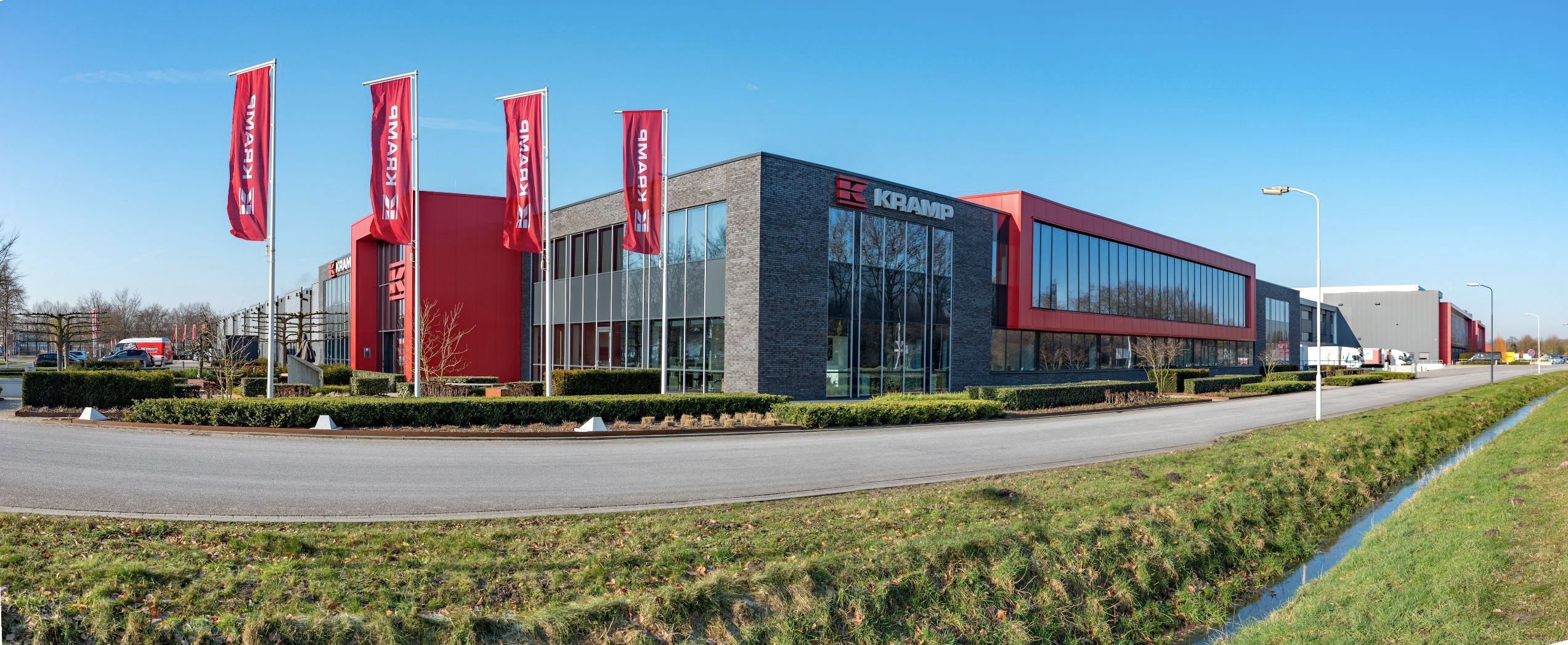
Kramp supplies the widest range of parts and accessories for Europe’s agricultural sector, offering more than 500,000 items directly from stock. Customers placing an order today often receive their parts the following night, or at the latest, the next day. “ We have an excellent web shop that reaches customers in 22 countries but our true differentiator lies in supply chain execution,” Noorman explains. “With eleven warehouses across Europe, we remain close to our customers and deliver exceptionally fast. Every day, we strive to make our supply chain faster, better, and more efficient.”
Reducing complexity
Over the past decade, Kramp has significantly improved the efficiency of its supply chain. The previous strategy, serving every customer from any warehouse, created unnecessary complexity. “It was technically possible for a customer in Spain to receive a shipment from Finland simply because the part happened to be in stock there. That level of flexibility added cost and inefficiency,” says Mirko Schuurman, Director Digital Transformation at Kramp. “We have become far more disciplined in reducing complexity, which lower costs and improves performance.”
Today, slow-moving items are now stocked centrally in the Varsseveld warehouse in the Netherlands. “That one part previously stored in Finland is now located in the Netherlands,” Noorman adds. “If a Spanish customer places an order, the system first checks the local warehouse. If it’s not in stock there, it checks the regional warehouse in France. If it’s not there either, we can dispatch it from the Netherlands, either through the local warehouse or directly via express delivery.”
“The OMS underpins the promises we make to our customers and ensures we fulfil them.”
Ebel Noorman, Director IT Operations & Fulfilment at Kramp
Central role of OMS
Manhattan’s order management system (OMS) plays a crucial role in this process. When a customer places an order, the system determines where the item is in stock, identifies the most efficient transport method, and calculates the delivery time. “The OMS is the linchpin of our warehouse network,” says Noorman. “It underpins the promises we make to our customers and ensures we fulfil them. The moment a customer clicks ‘order’, the system triggers execution by sending the instructions to the correct warehouse.”
Sometimes, the instruction doesn’t go to a warehouse but directly to a supplier. “Some items might only be ordered once a year, yet we still want to offer them. That’s why, in recent years, we’ve expanded our assortment with items stocked by our suppliers rather than in our own inventory,” says Schuurman. “When a customer orders these, the OMS automatically places an order directly with the supplier. This allows us to offer an additional two million items in addition to the 500,000 we have in stock, a number that continues to grow.”
Smoothing out peaks
The OMS also enables Kramp to smooth out workload peaks in their warehouses. Many customers, mainly local dealers repairing and maintaining agricultural vehicles, add items to their digital shopping baskets throughout the day but confirm their orders in the evening. That’s when Kramp traditionally starts picking orders. “We prefer to start earlier to reduce pressure on the warehouses. That’s why we encourage customers to confirm each item as they add it to their basket,” Schuurman explains. “The OMS then predicts, based on order history, whether it’s likely to be a standalone order or if more items will follow. If it’s just one, we pick it right away but if more are likely, the system holds off and consolidates everything into a single order for fulfilment at the end of the day.” Kramp is currently evaluating the opportunity to complement its 24-hour delivery service with additional options. These may include express delivery, as well as flexible scheduling services that allow customers to select a fixed day of the week or a specific future time for their shipments.
Removing ERP bottlenecks
Kramp is now embarking on a new digital transformation to strengthen the role of its OMS. “Until now, our ERP system has sat between the order management and warehouse management systems. Every OMS instruction passes through the ERP, and that legacy setup limits our capabilities. That’s why we’re now working to remove our ERP from the equation,” says Schuurman. Kramp is also using this project to migrate to Manhattan Active Omni, the cloud-native application for order management. “By moving to Manhattan Active Omni, we’ll always be up to date and automatically gain access to new features every quarter without the need upgrades,” Noorman explains.
“With a unified IT landscape, we can integrate new businesses faster and capitalise on our growth opportunities.”
Mirko Schuurman, Director Digital Transformation at Kramp
Designed for B2B
Manhattan Active Omni’s expanded B2B capabilities are particularly valuable to Kramp. “B2B companies have slightly different needs compared to the B2C sector,” Noorman explains. “For example, the ability to hold and consolidate orders until the end of the day is critical for us. We have formed a dedicated user group to provide feedback to Manhattan and many of our suggestions are now reflected in the platform. Manhattan genuinely listens to its customers,” Schuurman adds. Manhattan continues to play a leading role in this digital transformation. “There’s still work to be done before we go live with Manhattan Active Omni,” Noorman notes. “Multiple integrations with other systems need to be built and tested and Manhattan is leading both the design and implementation phases.”

Positioned for growth
Once the transformation is complete, Kramp will have built a strong foundation for future growth. Alongside Manhattan Active Omni, this foundation includes Oracle’s ERP system, supporting functions such as purchasing and finance. “We’re not simply upgrading systems; we’re harmonising and standardising our processes. By building a standardised foundation now, we create the conditions for accelerated growth later,” says Noorman. Schuurman concludes: “We already have a strong presence in Germany, France, and the Benelux, but significant opportunities remain in Southern and Eastern Europe. With a unified IT landscape, we can integrate new businesses faster and capitalise on these growth opportunities.”
Wilt u een fysiek exemplaar van het magazine ontvangen? Stuur een mail naar ce@manh.com o.v.v. Commerce Trends 2025, en vermeld bedrijfsnaam, uw naam, adres en woonplaats. Wij sturen u dan een exemplaar toe.













Reacties 0