
Transportation is the backbone of supply chains, essential to ensuring goods are delivered on time and meet customer expectations. Yet managing it is becoming increasingly complex, pressured by demands on shorter fulfilment times, capacity and cost efficiencies, tighter sustainability regulations, tech advances and the growing requirement for end-to-end visibility across all operations.
Underscoring these challenges, recent global research from Manhattan Associates found that 87% of respondents anticipated challenges in areas such as operational visibility, AI adoption and sustainability compliance would intensify, leaving their current transportation management systems (TMS) struggling to keep pace by 2030. Agility is no longer a buzzword used in business pitches and email blasts, it’s a doctrine, a creed, a prerequisite for survival, meaning the efficacy of a TMS is now a business critical question.
Changing the playing field
Microservices are a game-changer for supply chain agility, coordinating and optimising movements, allowing for quick reactions and evolutions. Individual components can be updated, upgraded or replaced without affecting the entire health of the system. This allows for faster adaptation to changing market conditions, customer demands and technological advancements. If you need a new feature, simply deploy it seamlessly without having to repair the whole system. Development cycles are shorter, and deployments are faster because teams can work on individual components simultaneously. The result? Continual 90-day innovation cycles, allowing for the best responses to emerging real-world threats and customer needs. Componentised microservices allow companies to select and implement only the components they need, avoiding the bloat and cost of traditional TMS, making for more tailored and cost-effective solutions that deliver greater value. The architecture also enables automatic scaling of functionalities as needed, ensuring the solution can handle growing data volumes and evolving business requirements too - critical when you consider the rise of AI.
Quicker ROI
It’s no secret. The quicker the implementation the faster you can start delivering ROI. From cost savings associated with optimised routing and the improved efficiency of automation, to the enhanced visibility of data for better decision making and the lower costs of training and configuration, a componentised approach enables companies to achieve a greater and (critically) faster return on investment.
It’s no secret. The quicker the implementation the faster you can start delivering ROI.
Agentic AI
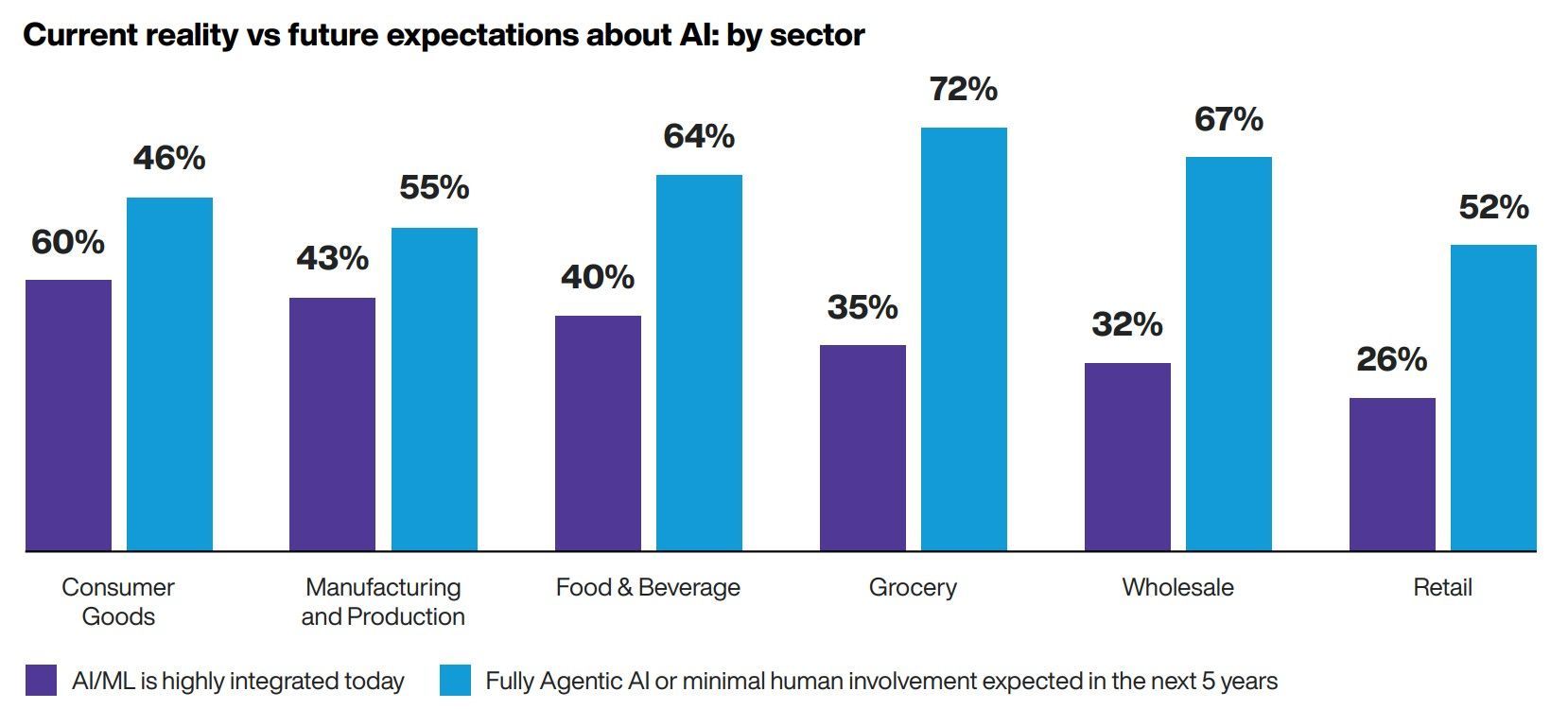
By 2030, 61% of organisations anticipate fully autonomous Agentic AI, capable of acting independently to achieve specific transportation management goals, however, only 37% have deeply integrated AI and machine learning in their TMS today. By operating on a platform-based, microservices architecture, organisations can add or modify specific modules and technologies to fit exact requirements. Need specialised logic for carrier selection? Build it. Want to add Agentic AI capabilities? Just connect it, without lengthy development cycles or costly overhauls. While you might consider five years in the AI space like an eon, the gap between future expectations and current usage is noteworthy given adoption is rarely straightforward.
Although almost half of the respondents (48%) said that they already feel very prepared for autonomous agents by 2030, practically every organisation (99%) reported facing, or expecting to face, hurdles, with concerns including skill shortages (49%), integration difficulties (44%) and data quality and availability issues (44%).
Balancing priorities
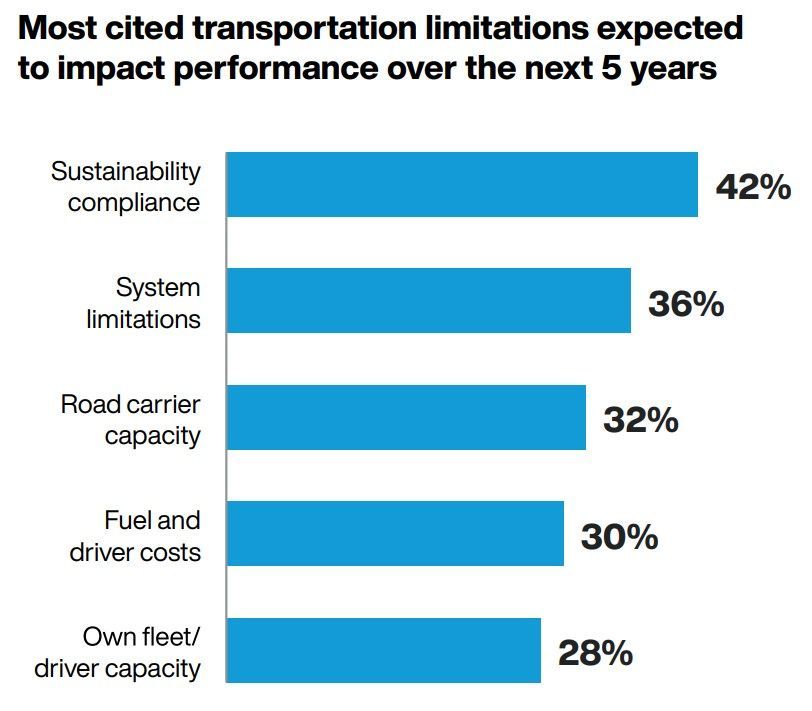
Navigating the complexities of today’s rapidly evolving commerce landscape is becoming more challenging and modern transportation management demands organisations balance a range of competing priorities. Whether it’s the challenges of evolving sustainability mandates, expectations around AI or the need for more visible, actionable data insights, looking ahead, these demands are only set to intensify, increasing the pressure on organisations to run transportation operations in smarter more intuitive ways. With autonomous agents set to revolutionise transportation management in the near future and a continually shifting landscape of competing priorities, delivering the transportation management experience of tomorrow starts right here, today.
 Download Manhattan’s report on transportation management.
Wilt u een fysiek exemplaar van het magazine ontvangen? Stuur een mail naar ce@manh.com o.v.v. Commerce Trends 2025, en vermeld bedrijfsnaam, uw naam, adres en woonplaats. Wij sturen u dan een exemplaar toe.













Reacties 0